Is your Pothos turning yellow ?
If you are asking why is my pothos turning yellow, take a breath: this is one of the most common houseplant problems, and it is usually fixable. Pothos (also called devil’s ivy) is famously tough, so yellow leaves are its way of telling you that something about water, light, or roots needs adjusting.
This guide walks you through the seven most common causes, shows you how to tell them apart, and gives step-by-step fixes. We also cover tips for Indian summers and monsoons, and answer the questions beginners ask most.
Quick answer: the most likely cause
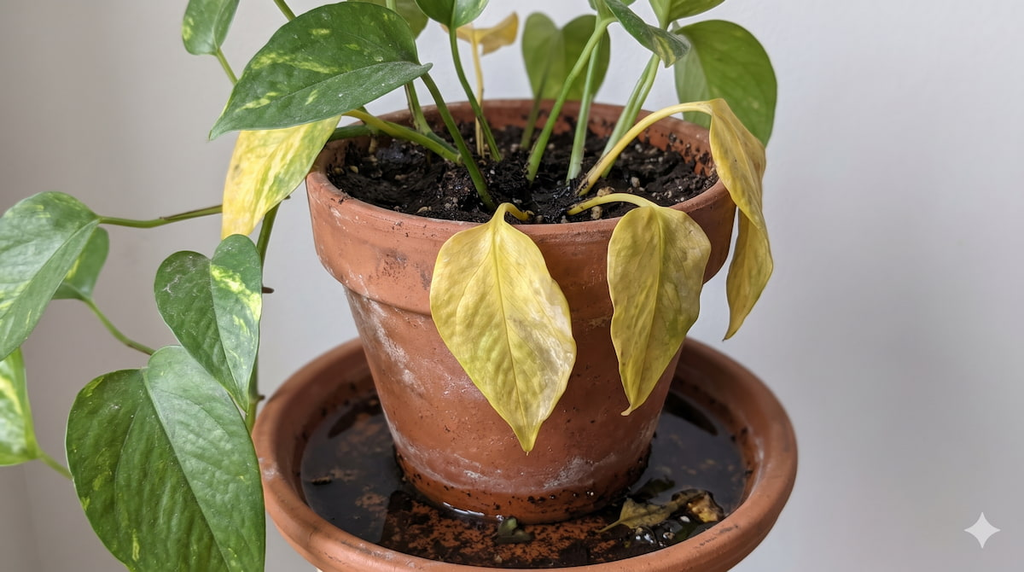
In most homes, yellow pothos leaves come from overwatering. If the soil stays wet for days, roots cannot breathe and the leaves turn yellow, often starting with the lower ones. Check the soil first. If it is damp or smells sour, stop watering and let it dry out before you do anything else.
Is some yellowing normal?
Yes. A pothos naturally sheds its oldest leaves over time. If you see one yellow leaf near the base of a long vine while the rest of the plant looks healthy and keeps growing, there is nothing to worry about. Pinch it off and carry on. Worry when several leaves yellow at once, the yellowing spreads quickly, or new growth is also affected.
Quick diagnosis table: symptom, cause, solution
| What you see | Likely cause | What to do |
|---|---|---|
| Lower leaves yellow, soil wet, stems soft | Overwatering or root rot | Stop watering, check roots, repot in fresh mix |
| Leaves yellow and crispy, soil bone dry | Underwatering | Water thoroughly until it drains, then keep a steady routine |
| Pale, washed-out yellow, leggy vines | Too little light | Move closer to bright, indirect light |
| Yellow patches with brown scorched spots | Too much direct sun | Move back from the window or filter the light |
| Uniform pale yellow, slow growth | Nutrient deficiency | Feed with diluted balanced fertiliser in the growing season |
| Yellow speckles, fine webbing, sticky residue | Pests such as spider mites or mealybugs | Isolate, wipe leaves, treat with insecticidal soap or neem oil |
| Yellow leaves after a move or cold draught | Stress or temperature shock | Keep it in a stable spot away from AC vents and cold windows |
The 7 causes in detail
1. Overwatering and root rot
This is the number one cause. Pothos prefers to dry out a little between waterings. Constantly wet soil pushes out the air that roots need, and the roots begin to rot. The leaves turn yellow, the stems may feel mushy, and the soil can smell unpleasant.
How to fix it:
- Stop watering and check that the pot has drainage holes.
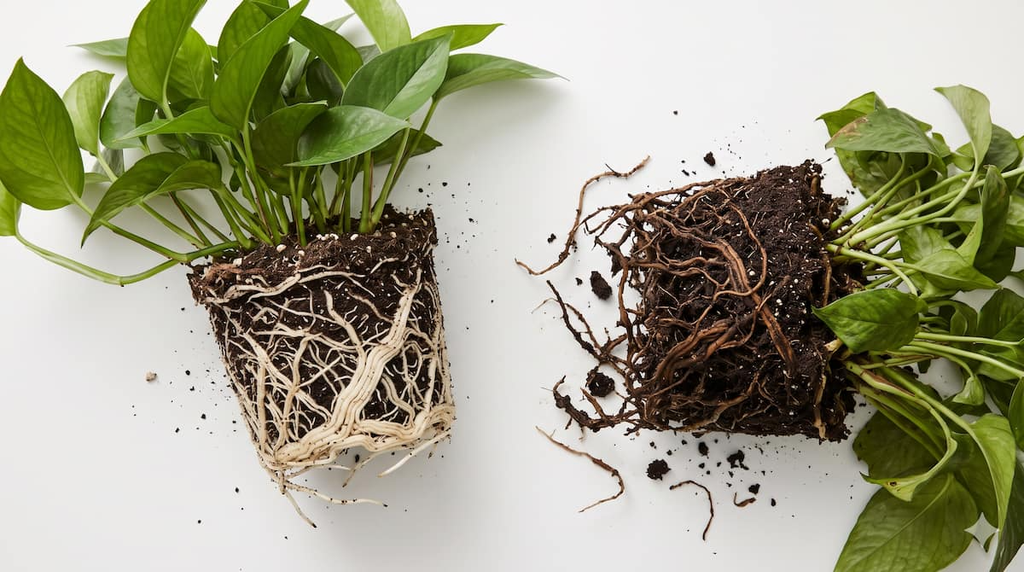
- Slide the plant out and look at the roots. Healthy roots are firm and pale; rotten roots are brown, black, and mushy.
- Trim away rotten roots with clean scissors.
- Repot in fresh, light, well-draining potting mix and do not water again for a few days.
2. Underwatering
If the soil is dry and pulling away from the pot, and the leaves are yellow and crisp, your plant is thirsty. This often happens when you travel or forget for a couple of weeks.
How to fix it: water slowly until water runs out of the drainage holes, empty the saucer, and then check the soil every few days so you learn the plant’s rhythm.
3. Not enough light
Pothos tolerates low light, but it does not love it. In dim rooms the leaves can fade to a pale yellow-green and the vines grow long with big gaps between leaves. Move the plant nearer a window with bright, indirect light.
4. Too much direct sun
Strong afternoon sun, especially through a west-facing window in summer, can bleach and scorch leaves. You will see yellow patches that turn brown and dry. Move the plant a metre or so back from the glass or soften the light with a sheer curtain.
5. Nutrient deficiency
A pothos in the same soil for a year or more can use up the nutrients. Leaves turn a uniform pale yellow and growth slows. Feed with a balanced houseplant fertiliser diluted to half the label strength every month or so during spring and summer. Do not fertilise a stressed or freshly repotted plant, and never feed when the soil is dry.
6. Pests
Spider mites and mealybugs suck sap from the leaves and cause yellow speckling. Look under the leaves and along the stems for tiny dots, fine webbing, or white cottony clumps. Isolate the plant, wipe the leaves with a damp cloth, and treat with insecticidal soap or neem oil, repeating weekly for a few weeks.
7. Stress from moving, drafts, or temperature swings
Pothos dislikes sudden changes. A new location, a blast from an air conditioner, or a cold window in winter can trigger a few yellow leaves as the plant adjusts. Choose a stable spot and give it a couple of weeks to settle before changing anything else.
Step-by-step: how to diagnose your own pothos
- Feel the soil. Wet, damp, or bone dry? This alone solves most cases.
- Look at which leaves are yellow. Old lower leaves point to age or overwatering; new leaves point to nutrients or light.
- Check the roots if the soil is wet and the plant looks unwell.
- Inspect for pests under the leaves and along the stems.
- Review the location: light, drafts, and recent changes.
- Fix one thing at a time and wait one to two weeks before judging the result.
Remember that a yellow leaf will not turn green again. Remove badly yellowed leaves so the plant can put energy into healthy growth, and judge your fix by the new leaves.
Pothos care tips for Indian homes
- Summer: heat dries soil quickly, so check more often, but avoid watering on a fixed schedule. Keep the plant out of harsh afternoon sun.
- Monsoon: high humidity slows drying. Water less often and make sure the pot drains freely to avoid root rot.
- Air conditioning: keep the plant away from direct cold air, which can cause leaf stress and yellowing.
- Hard tap water: over time it can leave salts in the soil. Flush the pot with plenty of water now and then.
Is a yellow pothos safe around pets?
Pothos is not a pet-safe plant. According to the botanical overview of Epipremnum aureum on Wikipedia, the plant contains calcium oxalate crystals that can irritate the mouth and stomach of cats and dogs if chewed. The same source notes that it is native to the Society Islands of French Polynesia, which explains why it thrives in warm, humid conditions. If you have pets or small children, hang the plant out of reach or choose a different species.
Why we wrote this guide around one question
We built this guide around the exact question people type into Google, answering it clearly and in order. That approach to understanding what people search for is the core idea behind search engine optimization, and it is how we plan every article on this site. If you would like to know more about who we are, visit our About Us page.
Frequently asked questions
Can yellow pothos leaves turn green again?
No. Once a leaf has turned fully yellow it will not recover. Remove it and focus on new growth, which should come in green once the cause is fixed.
Should I cut off yellow pothos leaves?
Yes, if they are mostly or fully yellow. Cut them at the base of the leaf stem with clean scissors so the plant does not waste energy on them.
How often should I water a pothos?
There is no fixed schedule. Water when the top 2 to 3 cm of soil feels dry, then water thoroughly until it drains. In a warm room this may be about once a week; in cooler or humid weather it will be less often.
Is tap water bad for pothos?
Usually it is fine. If your water is very hard, salts can build up and cause brown tips or yellowing. Letting water sit out overnight and flushing the soil occasionally can help.
Why are the new pothos leaves yellow?
Yellow new leaves often point to a nutrient shortage, too little light, or root problems. Check the roots and the soil first, then light, then consider feeding.
How long does a pothos take to recover?
Expect to see healthy new growth within two to six weeks once the cause is fixed. Be patient and avoid making several changes at once.
Final thoughts
Yellow leaves on a pothos are rarely a death sentence. Check the soil, look at the roots, review the light, and change one thing at a time. Most plants bounce back quickly once the cause is addressed. For more beginner-friendly help, head back to the homepage and explore our other plant care guides.